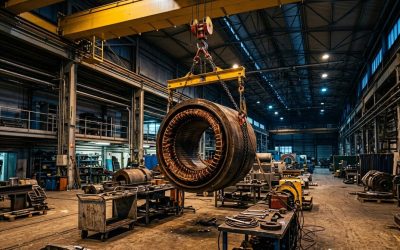
Railroad and Transit Traction Motor Repair: Meeting Federal Safety Standards Through Equipment Investment
Federal railroad safety enforcement has intensified dramatically, creating compliance pressures that ripple throughout the locomotive maintenance supply chain to reach motor repair facilities serving Class I railroads, regional carriers, and transit authorities. The Biden-Harris Administration’s unprecedented rail safety initiatives, combined with billions in infrastructure investment, have transformed the regulatory landscape for facilities rebuilding traction motors and related electrical apparatus.
The U.S. Department of Transportation’s rail safety fact sheet documents the scope of recent federal action: final rules on train crew size requirements, locomotive image recording devices, certification standards for signal and dispatcher employees, and strengthened freight car safety standards. The Bipartisan Infrastructure Law allocated $66 billion for America’s rail network, with more than 445 projects announced nationwide targeting infrastructure modernization, safety improvements, and equipment upgrades. This investment surge drives demand for motor repair services while simultaneously raising quality expectations.
Motor repair facilities serving railroad customers operate within a regulatory framework that demands documented quality systems, traceable processes, and verifiable outcomes. The Association of American Railroads Technical Services maintains mechanical standards and component specifications governing locomotive equipment, with committees comprising railroad and industry experts providing direction on standards development and enforcement.
Traction Motor Criticality in Railroad Operations
Locomotive traction motors represent the direct interface between electrical power and train movement, converting megawatts of electrical energy into the tractive effort that moves millions of tons of freight across North American rail networks daily. Motor failures during operation create cascading consequences: stranded trains blocking main line capacity, delayed shipments disrupting supply chains, and emergency response costs exceeding the repair expense itself by substantial multiples.
The reliability demands are extraordinary by any industrial standard. Traction motors must deliver rated output through temperature extremes from subzero winters to desert summers, withstand constant vibration from rail irregularities, and tolerate the electromagnetic stresses of regenerative braking cycles that occur thousands of times daily. Armature windings, commutators, and field coils accumulate damage progressively, requiring periodic overhaul to restore performance margins before failure occurs in service.
Class I railroads maintain detailed maintenance records tracking motor performance metrics, identifying units approaching intervention thresholds, and scheduling overhauls to minimize operational disruption. This predictive approach requires repair facilities capable of returning motors to service rapidly, with documented quality that instills confidence in railroad maintenance planners allocating their equipment investments.
Equipment Requirements for Railroad-Quality Repairs
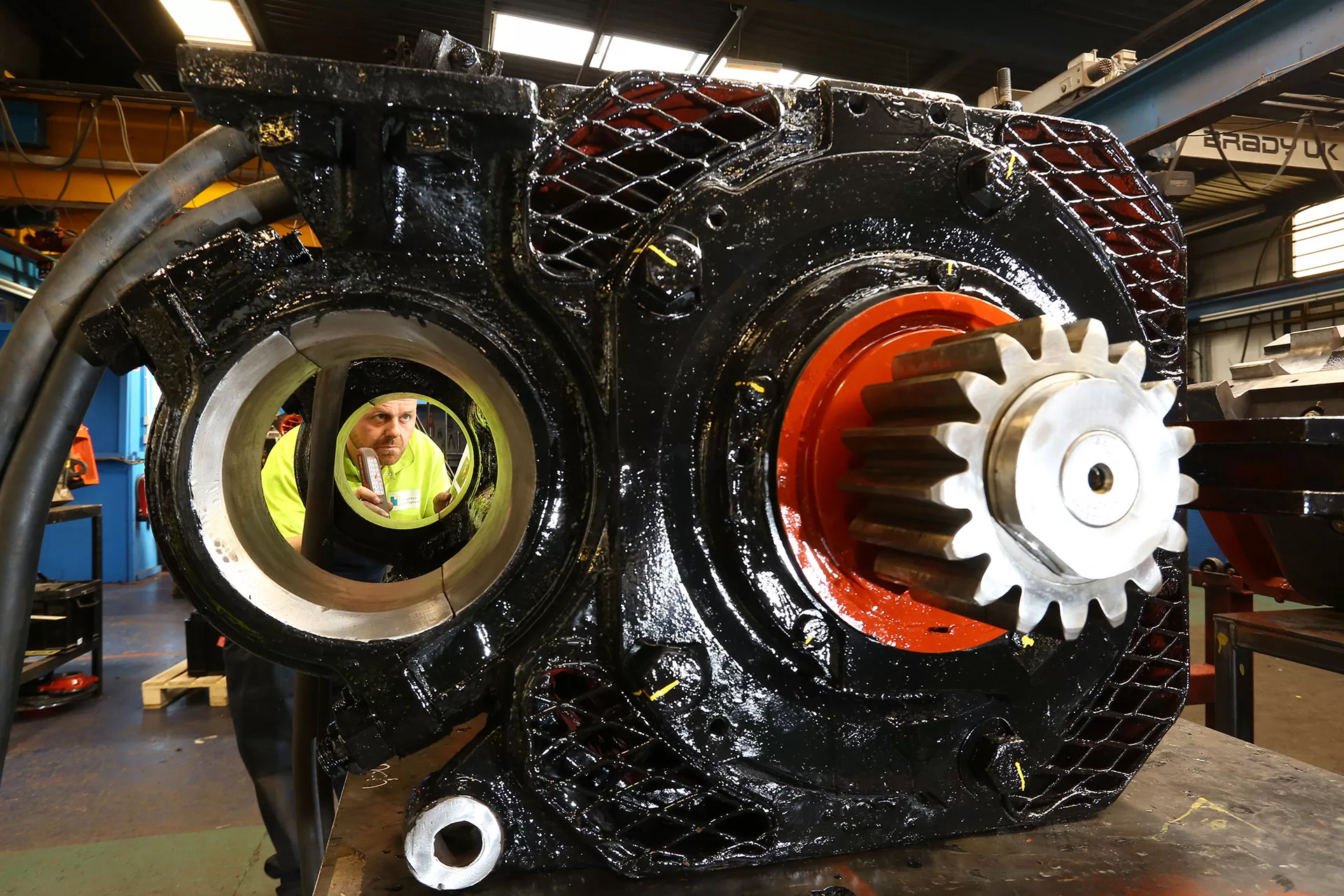
Railroad customers evaluate repair facilities based on capabilities that generic motor shops rarely possess. Traction motor armatures weigh thousands of pounds, requiring heavy-duty handling equipment throughout the repair process. Commutators demand surface finishes and dimensional tolerances that ensure proper brush contact under the electrical and mechanical stresses of locomotive service.
Automatic mica undercutting equipment proves essential for achieving the slot geometry specifications that prevent commutator problems during operation. Manual undercutting introduces variations that may pass initial inspection but cause premature failures under sustained load. Railroad maintenance managers have learned through costly experience that repair quality directly impacts motor reliability, making them increasingly selective about facility capabilities when sourcing overhaul services.
Understanding the broader context of motor repair equipment investment, as explored in Heavy-Duty DC Motor Repair Equipment: The Technology Reshaping Industrial Maintenance, reveals how specialized machinery addresses both quality requirements and workforce constraints affecting repair facilities industry-wide.
Quality Documentation and Traceability Requirements
Railroad customers require comprehensive documentation that traces each repaired motor through every process step, identifying materials used, procedures followed, and inspection results obtained. This documentation serves multiple purposes: demonstrating compliance with railroad specifications, supporting warranty claims when motors fail prematurely, and enabling root cause analysis when systematic problems emerge across motor populations.
Repair facilities investing in modern equipment gain documentation capabilities that older manual processes cannot match. Automated systems record operating parameters, test results, and process variables automatically, creating audit trails that satisfy railroad quality requirements with minimal administrative burden. This documentation capability has become a competitive differentiator as railroads consolidate their supplier bases toward facilities demonstrating systematic quality management.
The regulatory environment continues evolving, with FRA conducting safety culture assessments of Class I railroads and issuing enforcement reports documenting violations and penalties. Repair facilities serving these customers face indirect regulatory pressure as railroads respond to federal scrutiny by tightening their own supplier requirements.
Transit Authority Requirements and Growth Opportunities
Public transit agencies operating electric multiple unit trains, light rail vehicles, and commuter rail equipment represent a growing market segment for traction motor repair services. These agencies face similar motor reliability requirements as freight railroads but often operate with constrained maintenance budgets that make motor rebuilding economically attractive compared to new motor purchases.
Transit fleets typically standardize on specific motor designs, creating opportunities for repair facilities that develop expertise with particular motor types. The detailed knowledge required to optimize repairs for specific motor models represents valuable intellectual capital that differentiates specialized facilities from general-purpose shops.
Federal transit funding through the Infrastructure Investment and Jobs Act supports vehicle rehabilitation projects that often include motor overhauls, creating sustained demand for qualified repair services. Facilities positioned to serve this market require equipment capable of handling transit motor specifications, which differ somewhat from freight locomotive applications but share fundamental process requirements.
Examining how motor repair economics apply in extractive industries, Mining and Heavy Industry DC Motor Maintenance: Equipment That Addresses Workforce Challenges demonstrates the common equipment requirements across heavy-duty motor applications in different industrial sectors.
CAM Innovation: Your Partner in Motor Repair Equipment
At CAM Innovation, we specialize in precision equipment solutions for motor repair facilities serving railroad and transit markets. Our team understands the quality requirements, documentation demands, and production pressures characterizing this demanding sector.
Our Services Include:
- DC Motor Equipment – Automatic mica undercutters, banding machines, and armature processing equipment engineered for traction motor applications
- Contact CAM Innovation – Discuss equipment solutions for your railroad motor repair facility
Works Cited
“AAR Technical Services.” Association of American Railroads, aar.com/standards/index.php. Accessed 25 Nov. 2025.
“Fact Sheet on Rail Safety.” U.S. Department of Transportation, www.transportation.gov/briefing-room/fact-sheet-rail-safety. Accessed 25 Nov. 2025.
Related Articles
- Heavy-Duty DC Motor Repair Equipment: The Technology Reshaping Industrial Maintenance
- Mining and Heavy Industry DC Motor Maintenance: Equipment That Addresses Workforce Challenges