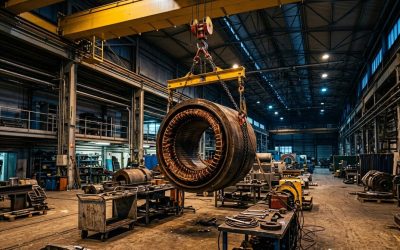

Advanced AC Motor Maintenance and Repair Strategies for Industrial Operations
Industrial AC motors power critical systems across manufacturing, processing, and infrastructure facilities where unexpected failures create substantial operational disruption and economic impact. Effective maintenance strategies minimize unplanned downtime and extend motor service life through systematic monitoring and proactive repair techniques.
CAM Innovation provides comprehensive AC motor equipment designed to support complete motor maintenance programs from diagnostic testing to precision repair operations. Our advanced equipment and technical expertise help facilities develop effective maintenance capabilities that reduce costs and improve reliability.
AC Motor Failure Modes and Early Detection Methods
Bearing failures account for approximately 40% of AC motor problems creating noise, vibration, and potential catastrophic damage if undetected. Rolling element bearing deterioration produces characteristic frequency patterns detectable through vibration analysis and acoustic monitoring. Early bearing problem detection enables planned replacement preventing secondary damage to motor components.
Stator winding insulation breakdown results from thermal stress, electrical overstress, or environmental contamination leading to ground faults or phase-to-phase failures. Insulation resistance testing and surge testing identify developing insulation problems before complete failure occurs. Regular insulation monitoring enables maintenance planning and prevents unexpected failures.
Rotor problems in squirrel cage motors include broken bars, end ring damage, and casting defects that create unbalanced magnetic forces and reduced performance. Motor current signature analysis detects rotor problems through characteristic current patterns. Rotor testing requires specialized equipment and techniques for accurate diagnosis and repair planning.
Mechanical problems including misalignment, imbalance, and coupling wear create excessive vibration and stress contributing to premature motor failure. Precision alignment equipment and balancing procedures prevent mechanical stress and extend component life. Regular mechanical inspection identifies developing problems before damage occurs.
Predictive Maintenance Technologies and Implementation
Vibration monitoring systems track motor condition through analysis of vibration patterns that indicate bearing wear, misalignment, and rotor problems. Permanent monitoring systems provide continuous surveillance while portable systems enable scheduled inspections. Vibration analysis requires proper sensor placement and trained personnel for effective implementation.
Thermal monitoring detects overheating conditions that accelerate insulation aging and component wear. Infrared thermography provides non-contact temperature measurement enabling safe inspection of energized equipment. Temperature trending identifies developing problems and verifies cooling system effectiveness.
Motor current analysis evaluates electrical and mechanical condition through analysis of supply current patterns. Current signature analysis detects rotor problems, air gap issues, and load problems without motor disassembly. Advanced current analysis provides comprehensive motor condition assessment supporting maintenance decisions.
Oil analysis for sleeve bearing motors identifies contamination, wear patterns, and lubrication degradation supporting optimal maintenance timing. Particle analysis, viscosity testing, and additive package evaluation provide detailed lubrication condition assessment. Oil analysis programs reduce bearing failures and optimize lubrication intervals.
Electrical Testing Procedures and Standards
Insulation resistance testing evaluates winding condition using megohm meters or insulation testers applying DC voltage to measure leakage current. Temperature compensation and proper test voltage selection ensure accurate readings. Trending insulation resistance measurements identifies degradation patterns supporting maintenance planning.
Surge testing applies high voltage pulses to winding systems detecting turn-to-turn insulation failures that may not appear during routine testing. Surge comparison testing between phases identifies weak insulation before complete failure. Surge testing requires specialized equipment and trained personnel for safe operation.
Power quality analysis identifies supply problems including voltage imbalance, harmonics, and transients that affect motor performance and longevity. Poor power quality accelerates insulation aging and reduces motor efficiency. Power quality monitoring supports motor application decisions and maintenance planning.
Ground fault testing verifies proper grounding system integrity and identifies developing ground fault conditions. Ground fault protection prevents electrical shock hazards and equipment damage. Regular ground fault testing ensures electrical safety and system protection.
Bearing Maintenance and Replacement Strategies
Lubrication management programs ensure proper lubricant selection, application quantities, and relubrication intervals based on bearing type, speed, and environmental conditions. Over-lubrication and under-lubrication both reduce bearing life requiring careful management. Lubrication analysis programs optimize lubricant performance and replacement timing.
Bearing selection considers load requirements, speed capabilities, environmental conditions, and maintenance preferences. Different bearing types provide varying performance characteristics affecting motor design and maintenance requirements. Proper bearing selection optimizes motor performance and maintenance intervals.
Installation procedures require proper tools and techniques to prevent bearing damage during replacement operations. Bearing mounting and dismounting equipment prevents mechanical damage ensuring proper fit and operation. Quality installation procedures extend bearing life and prevent premature failure.
Condition monitoring through vibration analysis, temperature measurement, and lubrication analysis enables optimal bearing replacement timing. Predictive techniques reduce unexpected failures and optimize maintenance scheduling. Bearing condition data supports inventory management and maintenance planning.
Stator Winding Repair and Replacement Techniques
Rewind evaluation considers motor value, repair costs, and expected service life determining optimal repair strategies. Age, condition, and application requirements influence rewinding decisions. Economic analysis compares rewind costs against replacement considering total life cycle costs.
Top 7 industries revolutionized by automatic winding machines demonstrates how automated winding technology improves repair quality and reduces costs across diverse industrial applications.
Coil removal requires careful techniques to prevent core damage and enable core reuse. Burning out, chemical stripping, and mechanical removal each have advantages and limitations depending on motor design and condition. Proper removal techniques preserve core integrity enabling successful rewinding.
Insulation systems must match or exceed original specifications considering thermal class, voltage rating, and environmental requirements. Modern insulation materials often provide superior performance compared to original systems. Insulation selection affects motor performance and service life.
Motor Testing After Repair and Maintenance
Performance testing verifies motor meets specifications including power output, efficiency, and electrical characteristics. No-load and load testing confirms proper operation and identifies any remaining problems. Performance verification provides confidence in repair quality and expected service life.
Quality control procedures ensure repair work meets industry standards and customer requirements. Comprehensive testing protocols verify electrical, mechanical, and thermal performance. Quality documentation supports warranty coverage and customer confidence.
Run testing identifies problems that may not appear during static testing including thermal expansion effects and dynamic balance issues. Extended run testing at various loads verifies stable operation. Run testing requirements depend on motor size, application, and customer specifications.
Certification procedures document test results and verify compliance with applicable standards and specifications. Test documentation supports warranty claims and provides performance baseline for future reference. Proper certification protects both repair facility and customer interests.
Environmental Factors and Protection Strategies
Contamination control reduces exposure to dust, chemicals, and moisture that accelerate motor degradation. Enclosure selection, filtration systems, and environmental monitoring protect motor components. Environmental protection investment provides substantial maintenance cost reduction.
Humidity control prevents moisture-related insulation problems and corrosion that reduce motor life. Ventilation design, drainage systems, and humidity monitoring maintain optimal conditions. Moisture protection enables reliable operation in challenging environments.
Temperature management prevents overheating that accelerates insulation aging and reduces component life. Cooling system design, ambient temperature control, and thermal monitoring ensure proper operating temperatures. Temperature control extends motor life and improves reliability.
Chemical exposure protection shields motor components from corrosive environments that attack insulation and metal components. Protective coatings, sealed enclosures, and material selection provide chemical resistance. Chemical protection enables motor operation in processing environments.
Energy Efficiency and Performance Optimization
Motor efficiency improvements reduce operating costs and may qualify for utility rebates or tax incentives. High efficiency motors provide lower energy consumption throughout motor life. Efficiency upgrades often justify replacement beyond simple repair cost comparison.
Load analysis ensures motors operate at optimal efficiency points avoiding oversizing that reduces efficiency and power factor. Motor loading between 75-100% typically provides optimal efficiency. Load matching optimizes both efficiency and motor life.
Power factor correction reduces electrical system losses and may reduce utility demand charges. Capacitor systems and variable frequency drives provide power factor improvement. Power factor optimization reduces total electrical system costs.
Variable frequency drive applications provide energy savings and improved process control for variable load applications. VFD systems enable speed control and soft starting reducing mechanical stress. Drive applications require proper motor selection and installation techniques.
Emergency Repair Procedures and Resource Management
Emergency diagnostic techniques enable rapid problem identification and repair planning minimizing production impact. Quick testing procedures identify safety concerns and determine repair feasibility. Emergency protocols balance safety with economic considerations.
Temporary repair solutions maintain operation while permanent repairs are planned and resources obtained. Bearing replacement, connection repairs, and cleaning can often restore limited operation. Temporary solutions provide time for proper repair planning and part procurement.
Spare parts management ensures critical components are available for emergency repairs reducing downtime duration. Inventory analysis balances carrying costs against downtime risks. Strategic spare parts selection considers failure probability and economic impact.
Service provider coordination optimizes emergency response through clear communication and defined responsibilities. Emergency service agreements provide guaranteed response capabilities. External service relationships supplement internal capabilities for complex repairs.
Cost Management and Budgeting Strategies
Life cycle cost analysis considers purchase price, installation costs, energy consumption, maintenance expenses, and disposal costs over motor service life. Total cost perspective guides optimal motor selection and maintenance decisions. Life cycle analysis prevents short-term decisions that increase long-term costs.
Maintenance budgeting allocates resources for predictive maintenance, preventive maintenance, and emergency repairs. Historical data and condition monitoring results guide budget development. Proper budgeting prevents maintenance delays that increase total costs.
Return on investment calculations evaluate maintenance program benefits including reduced downtime, extended motor life, and energy savings. ROI analysis guides maintenance investment priorities and technology selection. Investment analysis demonstrates maintenance program value.
Vendor management optimizes service relationships through performance monitoring, cost analysis, and service quality evaluation. Strategic vendor partnerships provide technical expertise and resource flexibility. Vendor evaluation ensures optimal service value and performance.
Training and Workforce Development
Technical training develops motor maintenance skills and diagnostic capabilities enabling effective maintenance programs. Hands-on training with actual equipment provides practical experience. Ongoing education keeps personnel current with evolving technologies and techniques.
Safety training ensures proper procedures during motor maintenance and testing operations. Electrical safety, mechanical hazards, and confined space entry all require specific training. Safety competency protects personnel and reduces liability risks.
The future of flat coil manufacturing systems explores how advanced manufacturing technologies are transforming motor repair capabilities and improving maintenance efficiency across industrial applications.
Certification programs validate technical competencies and support career development for maintenance personnel. Industry certifications demonstrate knowledge and skills. Certified technicians provide higher quality maintenance and reduced error rates.
Quality Assurance and Performance Standards
Industry standards provide testing procedures and performance criteria ensuring consistent motor evaluation and repair quality. IEEE and NEMA standards establish testing requirements and performance specifications. Standards compliance ensures interchangeability and reliable performance.
Documentation systems track motor history, maintenance actions, and performance trends supporting optimization decisions and warranty compliance. Detailed records enable failure analysis and maintenance effectiveness evaluation. Proper documentation supports continuous improvement and cost analysis.
Performance metrics measure maintenance program effectiveness including motor reliability, maintenance costs, and energy consumption. Key performance indicators track progress and identify improvement opportunities. Metrics-driven management optimizes maintenance resource allocation.
Customer satisfaction evaluation measures maintenance program success and identifies improvement opportunities. Feedback collection and performance tracking ensure maintenance meets operational requirements. Customer focus drives maintenance optimization and service quality improvement.
Advanced Diagnostic Equipment and Technologies
Motor circuit analyzers perform comprehensive electrical testing identifying problems that may not appear during basic testing. Advanced testing protocols evaluate surge resistance, insulation condition, and rotor integrity. Computerized analysis provides detailed diagnostic reports supporting repair decisions.
Partial discharge testing detects insulation deterioration in high voltage motors before complete failure occurs. Partial discharge monitoring identifies developing problems enabling planned maintenance. PD testing requires specialized equipment and expertise for accurate interpretation.
Dynamic balancing equipment corrects rotor imbalance that creates vibration and reduces bearing life. Portable balancing systems enable field correction without motor removal. Proper balancing extends motor life and reduces maintenance costs.
Laser alignment systems ensure precise motor-to-driven equipment alignment preventing premature wear and vibration problems. Precision alignment reduces bearing loads and extends component life. Alignment technology improves installation quality and reduces maintenance requirements.
Ready to optimize your AC motor maintenance program with advanced equipment and proven strategies? Contact CAM Innovation today to explore our comprehensive maintenance solutions and technical support capabilities.
Industry Resources and Regulatory Compliance
The Institute of Electrical and Electronics Engineers provides comprehensive motor testing standards and technical resources that ensure accurate motor evaluation and repair procedures. Their standards establish testing protocols, safety requirements, and performance criteria supporting quality maintenance programs across diverse industrial applications.
The National Electrical Manufacturers Association offers motor performance standards and application guidelines that support proper motor selection and maintenance decisions. Their resources provide technical specifications, efficiency standards, and application guidance ensuring optimal motor performance and reliability.
Frequently Asked Questions
What maintenance schedule should I follow for industrial AC motors?
Establish inspection intervals based on motor criticality, operating environment, and manufacturer recommendations with typical schedules ranging from monthly visual inspections to annual comprehensive testing. Critical motors require more frequent monitoring including quarterly vibration analysis and semi-annual electrical testing. Document operating hours, environmental conditions, and performance trends to optimize maintenance timing. Most motors benefit from annual insulation resistance testing and bearing lubrication evaluation. Adjust schedules based on condition monitoring results and failure history for optimal resource allocation.
How can I identify if an AC motor bearing needs replacement before failure occurs?
Vibration analysis provides early warning of bearing deterioration through characteristic frequency patterns that appear before audible noise develops. Temperature monitoring detects bearing overheating indicating lubrication problems or wear progression. Acoustic monitoring using ultrasonic detectors identifies bearing noise signatures indicating developing problems. Oil analysis for sleeve bearing motors reveals contamination and wear particles indicating bearing condition. Combine multiple monitoring techniques for comprehensive bearing condition assessment and optimal replacement timing.
What are the key differences between repairing and replacing AC motor windings?
Rewind costs typically range from 40-60% of replacement cost but require 2-4 weeks completion time compared to immediate replacement availability. Consider motor age, core condition, and expected service life when making repair decisions. Modern rewinds often provide improved performance through better insulation materials and updated designs. Replacement provides warranty coverage and known performance while rewinding may extend service life beyond original specifications. Evaluate total life cycle costs including energy efficiency improvements when comparing options.
How do I determine the root cause of repeated AC motor failures?
Systematic failure analysis examining failed components, operating conditions, and maintenance history identifies patterns indicating root causes. Power quality analysis reveals electrical system problems including voltage imbalance, harmonics, and transients affecting motor life. Environmental monitoring identifies contamination, temperature, or humidity conditions accelerating motor degradation. Load analysis determines if motors are properly sized and operating within specifications. Coordinate multiple analysis techniques to identify and eliminate failure root causes preventing recurring problems.
What safety precautions are essential during AC motor maintenance and testing?
Implement lockout/tagout procedures ensuring complete electrical isolation before beginning maintenance work on motor circuits. Use appropriate personal protective equipment including arc-rated clothing, safety glasses, and insulated tools when working on electrical equipment. Verify zero energy state using calibrated test instruments before contacting electrical components. Follow confined space procedures if motor work requires entry into restricted areas. Maintain proper ventilation and fire protection when using solvents or cleaning chemicals during motor maintenance operations.