JH Universal Commutator Repair Machine: Precision Solutions for Mid-Size Motor Maintenance
Mid-size motor repair facilities face unique challenges balancing capability requirements with space and budget constraints. Too often, shops must choose between inadequate equipment that limits repair quality or oversized machines that exceed both needs and budgets. The JH Universal Commutator Repair Machine bridges this gap perfectly, providing comprehensive repair capabilities for motors ranging from fractional horsepower to medium industrial sizes without the footprint or cost of larger universal machines.
CAM Innovation’s JH Universal Commutator Repair Machine delivers professional-grade multi-process capabilities in a compact, efficient package. This versatile machine serves electrical repair shops, maintenance departments, transit authorities, and industrial facilities that regularly service motors in the small to medium size range. By combining essential commutator repair functions with additional armature maintenance capabilities, the JH model maximizes shop productivity while maintaining superior repair quality.
Understanding the JH Universal Machine Design Philosophy
The JH Universal Machine represents thoughtful engineering focused on the most common motor repair needs. Rather than simply scaling down larger machines, CAM Innovation designed the JH specifically for shops handling motors typically found in industrial plants, commercial buildings, and light rail systems. This targeted approach results in a machine perfectly sized for 80-90% of typical repair work.
Compact dimensions allow installation in shops where larger universal machines simply won’t fit. The reduced footprint doesn’t compromise capability – the JH performs all critical commutator repair operations plus additional processes that expand service offerings. This efficiency makes the JH ideal for shops looking to grow their repair capabilities incrementally.
Build quality matches that of larger industrial machines, with precision components and robust construction ensuring decades of reliable service. The JH proves that shops don’t need to sacrifice quality or durability when selecting appropriately-sized equipment. This reliability particularly benefits smaller operations that can’t afford extended downtime.
Core Commutator Repair Capabilities
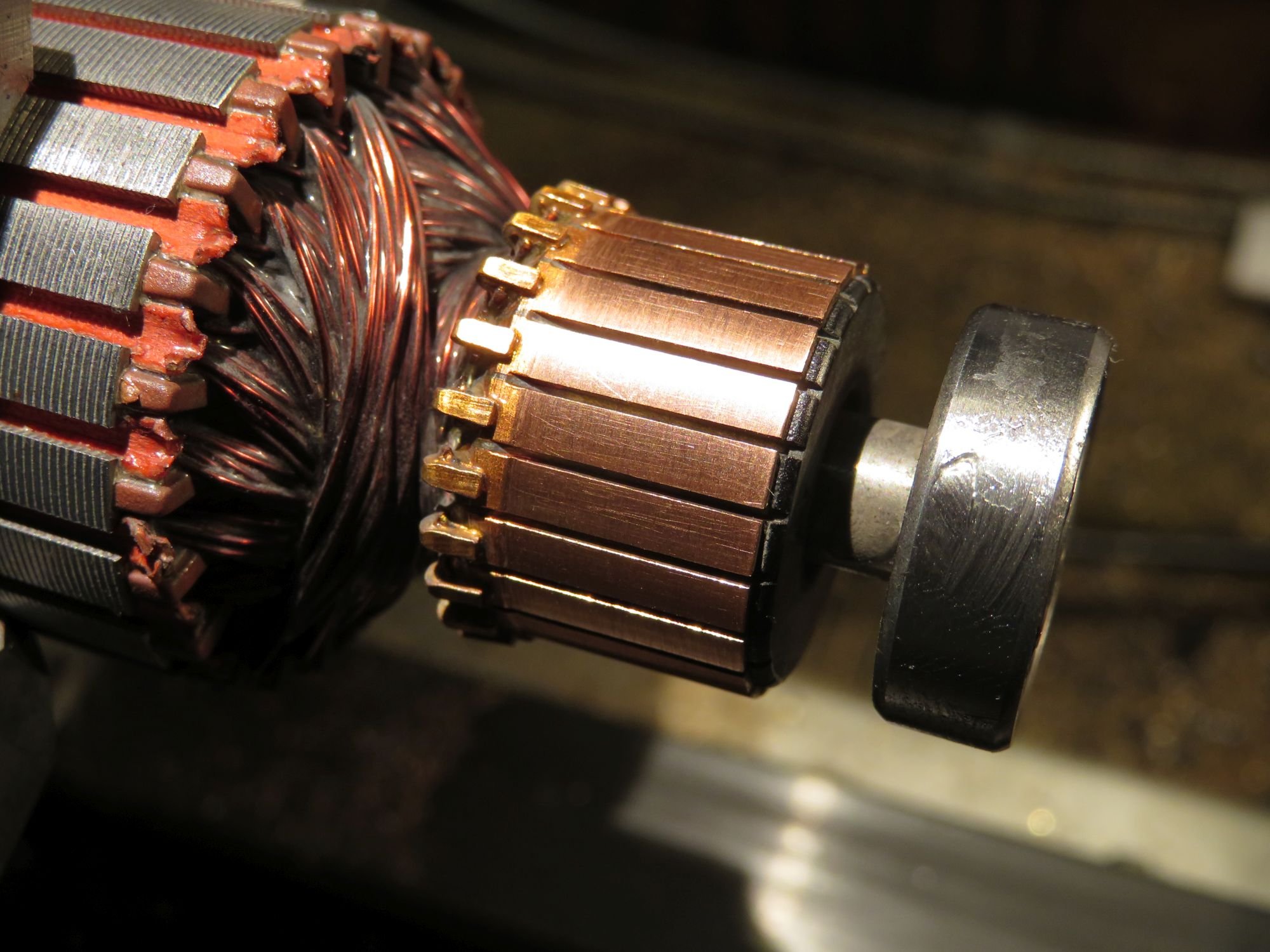
Commutator turning forms the foundation of the JH’s capabilities, with precision tooling that achieves surface finishes comparable to much larger machines. Variable speed control accommodates different commutator materials and diameters, while rigid construction minimizes chatter even during heavy cuts. Digital readouts enable precise diameter control for maintaining proper brush fit.
Undercutting operations achieve consistent mica removal critical for proper motor operation. The JH’s undercutting attachment maintains accurate depth control across the entire commutator face, preventing the irregular cuts that lead to carbon tracking. Automatic feed mechanisms reduce operator fatigue during this repetitive but critical process.
Finishing operations complete the commutator reconditioning process with options for polishing, deburring, and grooving. These final steps significantly impact brush life and motor performance. The JH’s stable platform and precise control systems produce mirror-like finishes that minimize brush wear and ensure quiet operation.
Armature Support and Handling Features
The JH accommodates armatures through a range of center heights and weights appropriate for its target market. Adjustable steady rests support longer armatures without deflection during machining operations. Quick-release centers speed job changeovers – a critical feature for repair shops handling diverse motor types daily.
Live center designs reduce setup complexity while ensuring accurate rotation during all operations. The tailstock features convenient adjustment mechanisms that maintain alignment without complicated procedures. These user-friendly features prove especially valuable in shops where operators handle multiple jobs daily.
Workholding versatility allows the JH to handle various armature configurations efficiently. Standard accessories accommodate everything from tiny fractional horsepower armatures to substantial industrial motor components. This flexibility prevents shops from turning away profitable repair work due to equipment limitations.
Expanding Capabilities Beyond Commutator Work
Like the DJ/DJM Universal Machines discussed in our comprehensive guide the JH provides multi-process functionality that extends well beyond basic commutator repair. Banding attachments enable application of string, tape, or wire banding to secure armature windings. Proper banding tension prevents winding movement during operation while avoiding insulation damage from excessive force.
Testing capabilities integrated into the JH help verify repair quality before reassembly. Growler testing identifies shorted windings, while bar-to-bar resistance measurements detect open circuits or high-resistance connections. These diagnostic capabilities save time by catching problems before complete motor reassembly.
Optional attachments further expand the JH’s versatility. Balancing equipment addresses vibration issues common in rebuilt motors. Simple modifications allow bearing journal repair, slot wedge installation, and other specialized operations. This expandability lets shops add capabilities as business grows without replacing core equipment.
Space Efficiency and Shop Layout Benefits
The JH’s compact footprint typically requires only 100-150 square feet including operator access and material staging areas. This efficiency proves invaluable in crowded repair shops where every square foot counts. Many shops install JH machines in spaces too small for conventional equipment, instantly adding profitable repair capabilities.
Mobility options allow repositioning as shop needs evolve. Heavy-duty casters enable movement for cleaning or layout changes, while leveling feet ensure stability during operation. This flexibility particularly benefits growing shops that regularly reconfigure work areas to accommodate new equipment or processes.
Integration with existing shop equipment happens seamlessly thanks to the JH’s thoughtful design. Standard height relationships align with common workbenches and material handling equipment. Electrical requirements match typical shop services without expensive upgrades. These practical considerations speed installation and minimize disruption.
Target Applications and Industries
Electric motor repair shops form the primary market for JH machines, particularly those specializing in commercial and light industrial motors. The size range perfectly matches motors found in HVAC systems, pumps, fans, and general industrial equipment. These shops appreciate the JH’s ability to handle their entire typical workload efficiently.
Maintenance departments in manufacturing facilities use JH machines for in-house motor repair programs. Rather than outsourcing commutator work, these departments save money and reduce downtime by performing repairs internally. The JH’s ease of operation allows training existing maintenance personnel rather than hiring specialists.
Transit authorities and railroad maintenance facilities find the JH ideal for auxiliary motor repairs. While traction motors require larger equipment, the numerous auxiliary motors in rail equipment fall within the JH’s capacity. Facilities implementing comprehensive universal machine strategies for motor and generator repair often add JH units specifically for their smaller motor work, creating efficient repair cells that handle equipment of all sizes.
Comparing JH to Larger Universal Machines
Capacity differences between the JH and larger universal machines like the DJ/DJM series reflect their different target applications. While the DJ handles 12,000-pound armatures, the JH focuses on the much more common sub-1,000-pound range. This specialization allows optimized design for the most frequent repair work.
Cost considerations strongly favor the JH for shops not requiring maximum capacity. Purchase price, installation costs, and ongoing operating expenses all scale appropriately for smaller operations. The financial barrier to adding professional commutator repair capabilities drops significantly with the JH option.
Performance comparisons show the JH matching larger machines in repair quality for appropriately-sized work. Surface finishes, concentricity, and overall precision meet the same high standards. Shops need not compromise repair quality when selecting equipment matched to their actual needs.
Operational Efficiency and Productivity
Setup time reduction compared to manual methods or improvised equipment provides immediate productivity benefits. Standardized workholding and integrated measurement systems eliminate guesswork and repeated adjustments. Operators quickly develop efficient routines that maximize throughput.
Multi-process capability means jobs stay on one machine rather than moving between stations. This efficiency particularly benefits one-person shops where the operator handles all aspects of repair. Reduced handling also minimizes risk of damage to delicate windings or commutator surfaces.
Consistent quality output builds customer confidence and reduces callbacks. Motors repaired on the JH run smoothly and quietly, meeting or exceeding original performance specifications. This reliability generates repeat business and positive referrals – critical factors for growing repair operations.
Training and Skill Development
Operator training for the JH typically requires less time than larger universal machines due to its focused design and intuitive controls. Basic operations can be learned in 2-3 days, with proficiency developing through hands-on experience. This rapid learning curve benefits shops with limited training budgets.
Safety features built into the JH protect both operators and equipment during the learning process. Interlocked guards prevent access to rotating parts, while emergency stops provide instant shutdown capability. These features create confidence for new operators while preventing costly accidents.
Advanced techniques develop naturally as operators gain experience. The JH’s precise control systems reward skilled operation with superior results. Many operators report continuous improvement in repair quality and efficiency months after initial training, demonstrating the machine’s capability to grow with user skills.
Maintenance Requirements and Longevity
Routine maintenance on the JH follows simple procedures that shop personnel can perform without specialized training. Daily cleaning and lubrication points are clearly marked and easily accessible. Weekly and monthly procedures require minimal time while ensuring continued precision.
Component accessibility simplifies both routine service and eventual repairs. Modular construction allows replacement of wear items without major disassembly. Standard components throughout reduce spare parts inventory requirements. These design features minimize both downtime and maintenance costs.
Service life expectations for JH machines match those of larger industrial equipment. Many units operate productively for 25-30 years with proper care. Rebuild services available from CAM Innovation can extend service life even further, protecting equipment investments for decades.
Return on Investment Analysis
Payback calculations for JH machines often show surprisingly quick returns, particularly for shops currently outsourcing commutator work. Typical repair charges of $200-500 per commutator mean only 200-300 jobs to recover equipment costs. Many busy shops achieve payback within 12-18 months.
Revenue expansion opportunities extend beyond simple commutator turning. The JH’s multi-process capabilities allow shops to offer complete armature repair services. Adding banding, testing, and balancing services increases average repair values while providing customer convenience.
Competitive advantages gained through in-house capability include faster turnaround times and quality control. Shops with JH machines often win contracts from customers tired of extended outsourcing delays. The ability to promise quick turnaround on critical repairs commands premium pricing.
Environmental and Safety Considerations
Dust collection provisions on the JH minimize airborne particles during undercutting and turning operations. Proper extraction protects operator health while maintaining clean shop environments. Built-in collection points simplify connection to central systems or portable units.
Noise levels remain reasonable thanks to precision construction and balanced rotating assemblies. The JH operates quietly enough for installation in mixed-use facilities without disturbing adjacent operations. This consideration proves important for shops in commercial or light industrial areas.
Safety interlocks and guards exceed industry standards, protecting operators throughout all operations. Emergency stop systems remain accessible from normal operating positions. These comprehensive safety features reduce insurance costs and satisfy regulatory requirements.
Selecting Accessories and Tooling
Standard tooling packages with JH machines cover most common repair operations immediately. Additional tooling expands capabilities for specialized work or improved efficiency. CAM Innovation provides guidance on tooling selection based on specific customer needs.
Quick-change tooling systems minimize setup time between different operations. Preset tooling eliminates repeated adjustments for common jobs. These efficiency features prove especially valuable in high-volume shops where minutes saved per job accumulate significantly.
Custom tooling solutions address unique repair challenges faced by specific industries. CAM Innovation’s engineering team develops specialized attachments for unusual applications. This support helps shops expand into profitable niche markets.
Industry Standards and Compliance
The Institute of Electrical and Electronics Engineers (IEEE) publishes standards for electric machinery testing and maintenance that guide repair specifications. Following these standards ensures repairs meet industry expectations for performance and reliability.
The Occupational Safety and Health Administration (OSHA) provides machine shop safety requirements that apply to motor repair operations. JH machines incorporate design features supporting compliance with these critical safety regulations.
Maximize Your Motor Repair Capabilities with the JH Universal Machine
The JH Universal Commutator Repair Machine provides the perfect solution for shops seeking professional repair capabilities without overinvesting in oversized equipment. This thoughtfully designed machine delivers the functions needed most while maintaining the quality standards customers expect.
CAM Innovation supports JH machine owners with comprehensive training, readily available parts, and technical assistance throughout ownership. Our commitment to customer success extends well beyond equipment delivery, ensuring your investment continues providing value for decades.
Ready to add professional commutator repair capabilities to your operation? Contact our specialists to discuss how the JH Universal Machine can expand your service offerings and grow your business.
Get Your Custom JH Universal Machine Quote
Frequently Asked Questions About JH Universal Machines
What size motors can the JH Universal Machine handle effectively?
The JH accommodates motors from fractional horsepower up to approximately 500 HP, depending on frame configuration. Armature weights up to 1,000 pounds and lengths to 36 inches fit comfortably. Commutator diameters from 1 inch to 12 inches fall within standard capacity. This range covers the vast majority of motors found in commercial and industrial facilities.
How does the JH compare to manual commutator repair methods?
The JH delivers dramatically superior results compared to hand-held equipment or drill press setups. Surface finish improves from typical 60-80 microinches with manual methods to 20-30 microinches on the JH. Concentricity maintains within 0.002 inches versus 0.010+ manually. Time savings average 70-80% while achieving professional-grade results consistently.
Can one operator run the JH Universal Machine effectively?
Single-operator efficiency was a primary JH design goal. All controls remain within easy reach from the normal operating position. Quick-change tooling and integrated measuring systems eliminate helper requirements. Most shops report one skilled operator achieving higher output than two people using conventional methods.
What electrical requirements does the JH need for installation?
Standard JH machines operate on 230/460V three-phase power, drawing approximately 5-7 HP depending on configuration. Single-phase conversions are available for shops lacking three-phase service. Total connected load rarely exceeds 10 KVA, fitting within most shop electrical capacities without upgrades.
How long does it take to become proficient operating the JH?
Basic proficiency typically develops within one week of regular operation. Operators with prior machining experience often achieve good results within 2-3 days. Advanced techniques like optimal feed/speed selection for different materials continue developing over several months. Most operators report confidence within 20-30 jobs.