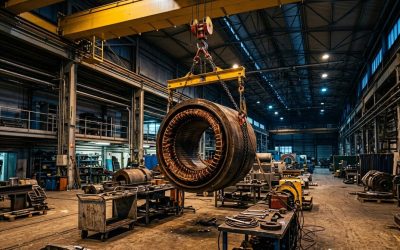
Heavy-Duty DC Motor Repair Equipment: The Technology Reshaping Industrial Maintenance
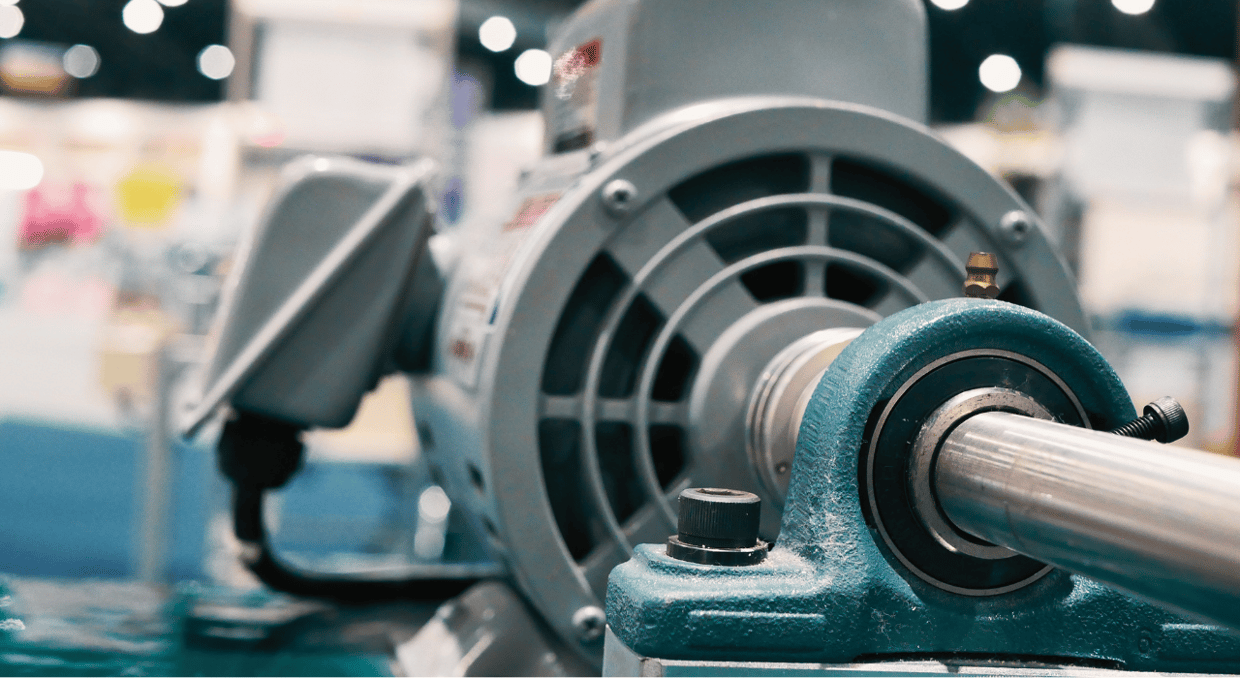
The skilled labor shortage hitting American manufacturing has reached crisis proportions, and nowhere is the impact more acute than in heavy-duty motor repair facilities serving railroads, mines, steel mills, and industrial plants. These specialized shops face a perfect storm: aging workforces, declining apprenticeship programs, and surging demand for motor rebuilding services as industries electrify operations and extend equipment lifecycles rather than replacing entire systems.
The mathematics are stark. According to research by Deloitte and The Manufacturing Institute, the manufacturing skills gap could result in 2.1 million unfilled jobs by 2030, with potential economic costs reaching one trillion dollars annually. Motor winding specialists represent one of the most critically affected occupational categories, with the Bureau of Labor Statistics projecting continued employment declines even as demand for motor repair services intensifies.
This collision between shrinking skilled labor pools and expanding service requirements has fundamentally altered the economic calculus for motor repair facility investments. Shop owners who once relied on hiring additional journeyman winders now recognize that specialized equipment represents a more reliable path to capacity expansion. The shift from labor-dependent to technology-enabled repair operations has accelerated dramatically since 2020.
The Specialized Nature of Heavy-Duty Motor Repair
DC motors powering locomotives, mining haulage trucks, and steel mill equipment operate under punishing conditions that consumer and light industrial motors never encounter. Traction motors in railroad service experience constant thermal cycling from acceleration and braking loads, exposure to track contaminants, and vibration stresses that progressively degrade armature insulation and commutator surfaces. Mining motors face corrosive atmospheres, shock loading from ore handling operations, and thermal stress from dust-restricted cooling.
The Bureau of Labor Statistics reports that coil winders, tapers, and finishers in the engine, turbine, and power transmission equipment manufacturing sector earn mean annual wages of $72,010, reflecting the specialized skills these positions require. Yet national employment in this occupation totals only 11,900 workers, with the highest concentrations in electrical equipment manufacturing, machinery manufacturing, and commercial equipment repair facilities.
Repair facilities serving these demanding applications require equipment purpose-built for the unique characteristics of heavy-duty DC motors. Armature diameters and weights far exceed those in general industrial service, demanding specialized handling and processing equipment. Understanding Railroad and Transit Traction Motor Repair: Meeting Federal Safety Standards Through Equipment Investment provides crucial context for how regulatory requirements drive equipment specifications in this critical sector.
Equipment Investment Returns Through Labor Multiplication
Modern automatic mica undercutters transform what was historically a labor-intensive, skill-dependent operation into a repeatable, precision process. Manual undercutting required experienced technicians working extended hours with hand tools, achieving variable results dependent on individual technique and attention span. Automatic systems execute consistent slot depths and profiles across every commutator segment, eliminating the quality variations that caused premature motor failures and warranty claims.
The productivity multiplication extends beyond simple time savings. A single operator running automated undercutting equipment can process armatures that previously required two or three skilled workers using manual methods. More importantly, the automated equipment produces more consistent results, reducing rework and extending intervals between motor overhauls. These quality improvements compound over the motor’s service life, delivering value far exceeding the initial equipment investment.
Banding machines and automatic TIG welders similarly transform operations that historically demanded extensive hand skills into repeatable, controllable processes. Wire banding armatures required apprentice-level training of one to two years before workers achieved consistent results. Automated banding systems with programmable tension control enable operators with minimal specialized training to produce professional-quality work within weeks of equipment installation.
Addressing the Apprenticeship Pipeline Collapse
The traditional pathway for developing motor winding expertise has fundamentally broken down. Formal apprenticeship programs in electrical apparatus service have declined precipitously over three decades, leaving shops dependent on hiring experienced workers from competitors or training in-house from entry-level employees. Neither approach scales to meet current demand, and both strategies face structural obstacles that sophisticated equipment can partially overcome.
Experienced workers approaching retirement age possess institutional knowledge accumulated over decades, including the subtle judgment calls that distinguish competent repairs from exceptional ones. When these workers exit, their expertise typically leaves with them, regardless of documentation efforts or mentorship programs. Equipment that captures their decision-making in programmable parameters preserves this expertise in operational form rather than attempting to transfer it through instruction alone.
Entry-level workers benefit from equipment interfaces that guide them through complex operations with reduced opportunity for consequential errors. Modern armature seasoning machines simulate motor operating conditions while monitoring performance parameters, enabling less-experienced technicians to verify repair quality without developing the intuitive judgment that historically required years to cultivate. The equipment becomes the quality assurance mechanism, rather than depending entirely on worker expertise.
Exploring Mining and Heavy Industry DC Motor Maintenance: Equipment That Addresses Workforce Challenges illuminates how these workforce dynamics play out specifically in extractive industries where motor reliability directly impacts production economics.
Capital Investment Economics in Current Market Conditions
Equipment acquisition decisions increasingly favor automation as labor costs escalate and availability constraints tighten. The traditional break-even calculation comparing equipment payments against labor savings has shifted dramatically as wage pressures intensify and recruitment difficulties extend job vacancies for months rather than weeks.
Facilities evaluating major equipment purchases now factor in opportunity costs from delayed repairs, premium wages required to attract scarce talent, and competitive positioning as customers seek shops capable of handling their growing repair backlogs. Equipment that enables a facility to accept work competitors must decline represents strategic value beyond operational efficiency gains.
Financing arrangements have evolved to align equipment payments with productivity improvements, reducing barriers for facilities hesitant to commit significant capital upfront. Manufacturers increasingly offer installation support, operator training, and ongoing technical assistance that accelerates time-to-productivity and reduces implementation risk.
CAM Innovation: Your Partner in Motor Repair Equipment
At CAM Innovation, we specialize in precision equipment solutions for motor repair facilities serving heavy industrial markets. Our team understands the unique requirements of shops rebuilding traction motors, mining equipment, and industrial apparatus under demanding production schedules.
Our Services Include:
- DC Motor Equipment – Automatic mica undercutters, banding machines, TIG welders, and armature stands engineered for heavy-duty applications
- Contact CAM Innovation – Discuss your specific equipment requirements and facility needs
Works Cited
“2.1 Million Manufacturing Jobs Could Go Unfilled by 2030.” National Association of Manufacturers, nam.org/2-1-million-manufacturing-jobs-could-go-unfilled-by-2030-13743/. Accessed 25 Nov. 2025.
“Occupational Employment and Wages, May 2023: 51-2021 Coil Winders, Tapers, and Finishers.” Bureau of Labor Statistics, U.S. Department of Labor, www.bls.gov/oes/2023/may/oes512021.htm. Accessed 25 Nov. 2025.
Related Articles
- Railroad and Transit Traction Motor Repair: Meeting Federal Safety Standards Through Equipment Investment
- Mining and Heavy Industry DC Motor Maintenance: Equipment That Addresses Workforce Challenges