CAM Innovation — custom automated machinery for the heavy-duty electric motor repair industry, proudly made in the USA in Hanover, Pennsylvania.
The locomotives hauling America’s freight and the railcars carrying its commuters share a hidden vulnerability: the traction motors that turn their wheels are being worked harder, and kept in service longer, than almost anyone planned. In 2026 that is turning into a wave of overhaul demand. Freight volumes are climbing — the Association of American Railroads reports U.S. carload and intermodal traffic running ahead of last year through 2026, up roughly 3% year over year by midyear, with metallic ores and metals among the commodity groups posting gains. Every additional ton is another mile of load on a traction motor.
The Freight Side: More Tonnage, the Same Fleets
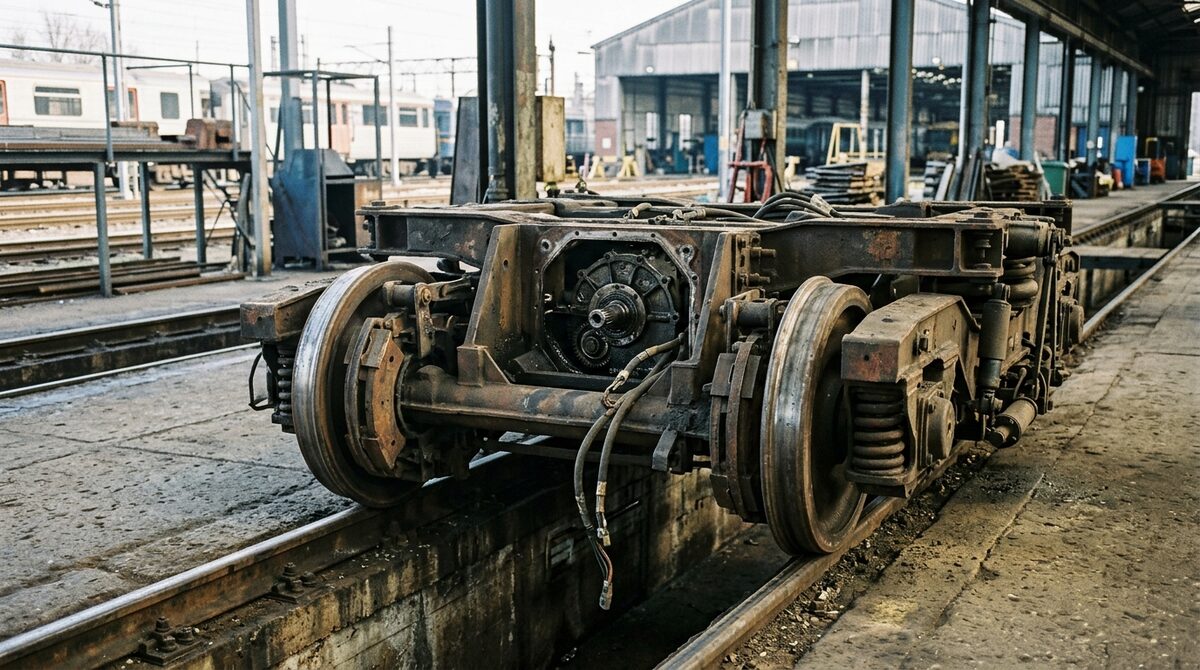
Railroads have spent years running leaner, with fewer locomotives covering more work. When volumes rise, the fleet does not magically expand; the existing units simply run more. Traction motors — the powerful machines mounted on locomotive trucks that convert electrical power into tractive effort — absorb that extra duty through heat, vibration, and commutator wear. Rebuilding them on a scheduled cycle is far cheaper than losing a locomotive to an unplanned failure, and far faster than waiting on new-build replacements in a tight equipment market. As freight demand strengthens through 2026, the overhaul cadence tightens right along with it, and shops that can rebuild traction motors quickly become a critical link in keeping trains moving. AAR’s quarterly overview points to six consecutive months of carload growth heading into the second half of the year, a sign that freight demand is building rather than fading — and that locomotives will keep running hard.
The Transit Side: A Fleet That’s Aging in Plain Sight
If freight is a story of intensity, transit is a story of age. The Federal Transit Administration reports that America’s transit systems carry a state-of-good-repair backlog exceeding $105 billion, and the agency has noted that roughly one-third of the nation’s subway and commuter rail vehicles are more than 25 years old. Agencies cannot replace those fleets overnight — new railcars take years to design, build, and deliver — so they keep older cars running safely, which means overhauling their propulsion systems again and again. The traction motors on a 30- or 40-year-old transit car are prime candidates for rebuilding rather than replacement, both because spares may no longer be manufactured and because a quality rebuild restores reliability at a fraction of new-car cost.
Federal Money Is Backing the Work
Washington is underwriting the modernization. The Infrastructure Investment and Jobs Act represents the largest federal investment in public transportation in the nation’s history, authorizing up to $108 billion through 2026. Through it, the FTA is channeling billions into fleet repair and replacement, including $23.1 billion over five years in State of Good Repair grants and a dedicated Rail Vehicle Replacement Program funded at $1.5 billion. In May 2026, the agency announced roughly $166 million in the latest competitive round of that program. Not all of that money buys brand-new cars; much of it flows into bringing existing rolling stock — and the motors that propel it — back to a state of good repair. For the shops that overhaul traction motors, that adds up to a multi-year, federally backed pipeline of work that does not depend on the business cycle.
Why Traction Motors Reward Precision Repair
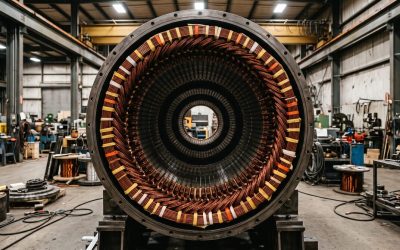
Traction motors are among the most demanding machines to rebuild. They live in a brutal environment — road grime, temperature swings, constant pounding — and they must deliver exact, repeatable performance every time a train accelerates. Restoring one properly means undercutting the commutator mica, truing and slotting the commutator, precision-welding armature connections, and banding the armature under controlled tension so it holds together at speed. Done manually, each step is slow and inconsistent; done on automated, purpose-built equipment, it becomes fast and repeatable across an entire fleet. That consistency is what lets a railroad or a transit agency trust a rebuilt motor to perform like new.
This is the same shift toward rebuilding rather than replacing that is playing out across heavy industry in 2026, driven by materials costs and long lead times — the broader picture detailed in Repair or Replace? The 2026 Outlook for Heavy-Industry Electric Motors. For traction motors specifically, the combination of punishing duty cycles and irreplaceable legacy designs makes precision rebuilding not just economical but essential.
The Outlook for the Rest of 2026
Both halves of the rail equation point the same way. Freight volumes are climbing, keeping locomotive traction motors under load, while transit fleets keep aging under a repair backlog measured in the hundreds of billions — with federal dollars actively funding the fix. Neither trend reverses before year-end. The same punishing conditions and rebuild-first economics apply to the heavy motors in mines and mills, as covered in Why Mining and Steel Are Keeping Their Big DC Motors Turning in 2026. For traction-motor overhaul shops, the constraint is not finding work; it is having the equipment and throughput to turn heavy, high-stakes motors around quickly enough to keep trains on schedule. The operations best positioned to win in 2026 are the ones that can rebuild at speed without sacrificing the precision the rails demand.
CAM Innovation: Built for Traction Motor Repair
CAM Innovation’s Universal Machines and undercutting equipment let rail and transit shops rebuild traction motors with the consistency and speed modern fleets require — engineered and made in the USA.
Our Solutions Include:
- Multi-Process Universal Machines — Instantly become a state-of-the-art traction motor repair facility with consistent, high-quality results
- Automatic Mica Undercutters — Save hours of labor and improve quality across all sizes of DC traction motor repair
Ready to speed up your traction motor overhauls? Contact CAM Innovation to spec the right equipment for your shop.
Works Cited
- “Freight Rail Data Center.” Association of American Railroads, www.aar.org/data-center/. Accessed 22 July 2026.
- “The Infrastructure Investment and Jobs Act.” Federal Transit Administration, U.S. Department of Transportation, www.transit.dot.gov/IIJA. Accessed 22 July 2026.