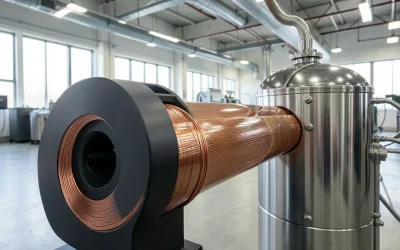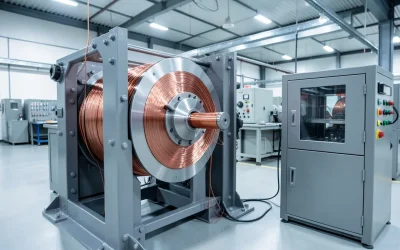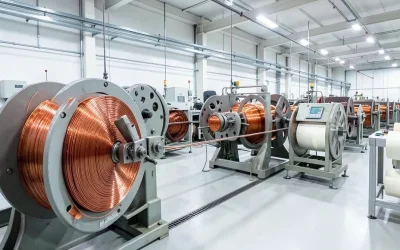
CAM Innovation — custom automated machinery for the heavy-duty electric motor repair industry, proudly made in the USA in Hanover, Pennsylvania.
Across heavy industry, the machines that actually move the economy are electric motors — and in 2026, the smartest money is on keeping the ones already installed running rather than buying new. According to the International Energy Agency’s Electric Motor Systems platform, electric motor systems were responsible for 53% of global electricity consumption in 2023, a share that climbs to 72% within industry itself. In railroads, mines, mills, and refineries, giant motors are not a supporting cast; they are the production line. When one fails, output stops. That single fact is reshaping capital decisions this year, because the cost and the lead time of replacement are both climbing fast.
The Math Has Shifted Toward Rebuilding
For decades, a failed heavy-duty motor prompted a familiar debate: repair the old unit or buy a new one? In 2026, the economics have tilted hard toward repair, and the clearest driver is copper — the metal at the heart of every winding. The IEA reports that copper prices surged to record highs, briefly exceeding $14,500 per tonne intraday in January 2026, having only passed $12,000 per tonne for the first time in December 2025. The agency also warns of a potential 30% copper supply deficit by 2035, with new mines taking roughly 17 years to move from discovery to production. Copper that expensive and that constrained makes a new motor — essentially a large, precisely wound copper assembly — both pricier to buy and slower to source.
Lead times compound the problem. Large industrial and traction motors are increasingly built to order, and the queue for new units has stretched as demand for electrical equipment surges worldwide. A rebuild, by contrast, reuses the existing frame, core, and much of the structure, replacing only what has actually worn out. For a mine or a mill that cannot afford weeks of downtime waiting on a new motor, refurbishing the machine already on the floor is often the only option that fits the schedule — and the budget.
Sustainability Adds a Second Argument
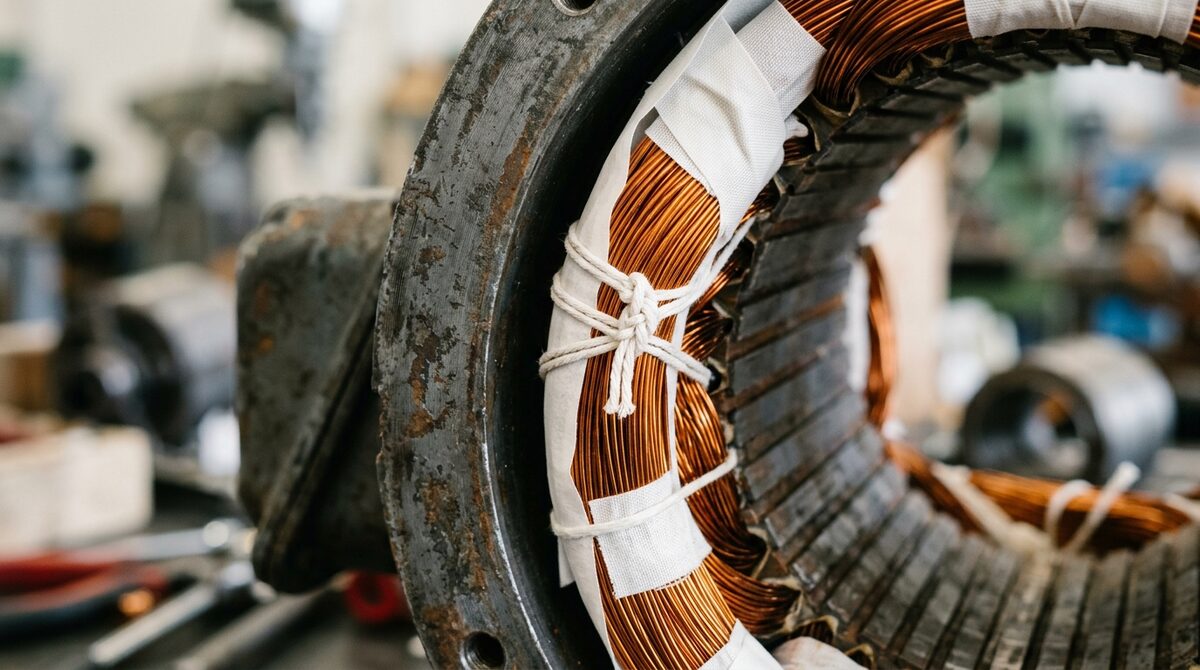
The environmental case reinforces the financial one. The IEA’s motor platform estimates that better motor-system practices could cut motor-driven electricity demand by 20% to 30% with short payback periods, and it explicitly calls for policies that improve the efficiency of existing systems, not just standards for new ones. Rebuilding a motor keeps hundreds — sometimes thousands — of pounds of copper, steel, and cast iron in service, rather than sending them through the energy-intensive cycle of scrapping, smelting, and remanufacturing from raw ore. A quality rewind can also restore, or even improve, a motor’s efficiency, trimming the electricity bill on a machine that may run around the clock for another decade. In an era of tightening efficiency expectations and volatile materials markets, “rebuild it better” is both the greener and the cheaper path.
Where the Pressure Is Concentrated
The repair-or-replace calculus is most acute in the industries that run the largest, hardest-working motors. Freight railroads are moving more tonnage in 2026, keeping locomotive traction motors under near-constant load — a dynamic explored in Aging Rail and Transit Fleets Are Driving Traction Motor Overhauls in 2026. Mining and primary metals, where draglines, hoists, and grinding mills run continuously, face the same pressure. In each of these sectors, the installed base skews heavily toward direct-current (DC) machines — traction motors, mill motors, and mine-duty units that were engineered to last generations and are worth rebuilding precisely because replacing them is so costly.
The Repair Infrastructure Behind the Trend
Rebuilding heavy-duty motors well is not a bench job. Restoring a large DC armature to like-new condition demands specialized processes: undercutting the mica between commutator bars, precision TIG welding of armature connections, banding rotors and armatures under controlled tension, seasoning armatures at operating temperature and speed, and slotting commutator risers accurately. Each step, done by hand, consumes hours of skilled labor and introduces variability. Done on purpose-built, automated equipment, the same work becomes faster, more consistent, and far more repeatable — which is exactly what a motor shop needs when its order book is full and skilled winders are scarce.
That is the quiet enabler of the 2026 repair surge. The motors coming into shops are bigger, more valuable, and more urgent than ever, and the operations that can turn them around quickly and reliably are the ones capturing the work. The bottleneck is rarely demand; it is the capacity and precision of the repair process itself.
The Outlook for the Rest of 2026
None of the forces pushing industry toward repair are likely to ease before year-end. Copper remains historically expensive and structurally tight. New-motor lead times remain long. Efficiency and sustainability pressures keep building. And the installed base of heavy DC motors keeps aging while the industries that depend on them run flat out — a pattern just as visible in heavy metals and mining, examined in Why Mining and Steel Are Keeping Their Big DC Motors Turning in 2026. The result is a repair market with strong, durable tailwinds, and a growing premium on shops equipped to do the work at speed and scale. For the plant manager weighing that failed mill motor or that road-weary traction motor, the 2026 answer is increasingly clear: rebuild it, rebuild it better, and get it back on the line.
CAM Innovation: Equipping the Motor Repair Industry
For decades, CAM Innovation has designed and built the automated machinery that heavy-duty motor repair shops rely on to rebuild traction, mill, and mine-duty motors faster and more consistently — all engineered and made in the USA.
Our Solutions Include:
- DC Motor Equipment — A complete line of machinery for repairing heavy-duty DC motors used across rail, mining, steel, and more
- Multi-Process Universal Machines — Turn your shop into a state-of-the-art traction motor repair facility with consistent, high-quality results
Ready to modernize your motor shop? Contact CAM Innovation to design equipment around your production rate, space, and quality goals.
Works Cited
- “Electric Motor Systems – A Key Element on the Way to Global Net Zero.” EMSA, IEA 4E Technology Collaboration Programme, 19 Dec. 2025, www.iea-4e.org/emsa/news/electric-motor-systems-a-key-element-on-the-way-to-global-net-zero/. Accessed 22 July 2026.
- Dhir, Shobhan, et al. “Copper Prices Have Hit Record Highs, but Smelters Face Mounting Strategic Pressures.” International Energy Agency, 2 Mar. 2026, www.iea.org/commentaries/copper-prices-have-hit-record-highs-but-smelters-face-mounting-strategic-pressures. Accessed 22 July 2026.