How a $140 Billion Transit Backlog Is Driving DC Motor Armature Banding Equipment Demand
CAM Innovation: Precision Equipment for Heavy Industry
America’s transit and freight rail systems are running on motors that were never designed to last this long. As capital budgets fall behind replacement schedules and supply chains for new equipment stretch, operators are rebuilding traction motors at unprecedented rates—and the armature banding equipment that holds those rebuilds together has become one of the most quietly critical investments in the rail maintenance ecosystem.
The scale of the deferred work is staggering. The Federal Transit Administration estimates the nation’s public transit systems carry a state-of-good-repair backlog exceeding $140.2 billion, up from approximately $101.4 billion in 2018. About one-third of the country’s subway and commuter rail vehicles are now more than 25 years old, and some fleets average closer to 40 years in service. Amtrak reflects a similar pattern: data published by the Bureau of Transportation Statistics tracks how the national passenger rail fleet has consistently operated well past intended service lives, with capital programs perpetually trailing replacement needs.
Why Armature Banding Is Non-Negotiable
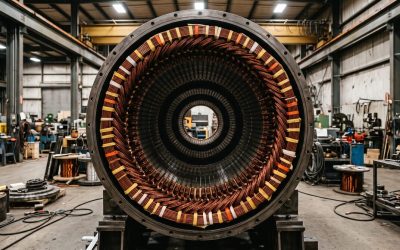
DC traction motor armatures spin at thousands of RPM under heavy electrical and thermal load. Without proper banding, the copper coils protruding from the armature slots—called end turns—would fly outward under centrifugal force, contact the housing, and destroy the motor within seconds. Banding is the mechanical loop that holds these windings in place and prevents catastrophic failure during acceleration, braking, and continuous high-speed operation.
For decades, steel wire was the standard banding material, applied under tension and soldered in place. Modern practice has shifted almost entirely to pre-impregnated glass fiber resin tape, which delivers higher tensile strength, lower mass at the rotating diameter, electrical insulation rather than conductivity, and resistance to the thermal cycling that fatigues steel bands. Tensile strengths approaching 75,000 pounds per square inch are routine, and resin systems rated to 220 degrees Celsius handle the most demanding industrial environments. The broader pattern of equipment modernization across the DC motor sector is examined in Why Aging Industrial DC Motor Fleets Are Driving an Equipment Investment Surge in 2026.
The catch is application. Glass banding must be applied at precisely controlled tension while the armature rotates on a heated stand, with resin cured in place to lock layers into a single mechanical band. Improper tension produces bands that loosen in service. Excessive heat damages the underlying insulation. Inconsistent layering creates stress concentrations that fail under load. Quality requires equipment designed specifically for the job.
The Maintenance Backlog Drives Equipment Investment
Transit agencies and freight operators have responded to the rebuilding pressure by expanding in-house overhaul capacity and contracting with regional motor shops. According to the Federal Transit Administration’s research on railcar maintenance management, the U.S. transit industry operates more than 20,000 railcars in active service, with maintenance practices and equipment quality directly tied to fleet performance, cost-effectiveness, and state-of-good-repair outcomes. Agencies that invest in capable rebuild infrastructure—including precision banding equipment—report better motor reliability and lower lifecycle costs than those relying on minimum-effort maintenance.
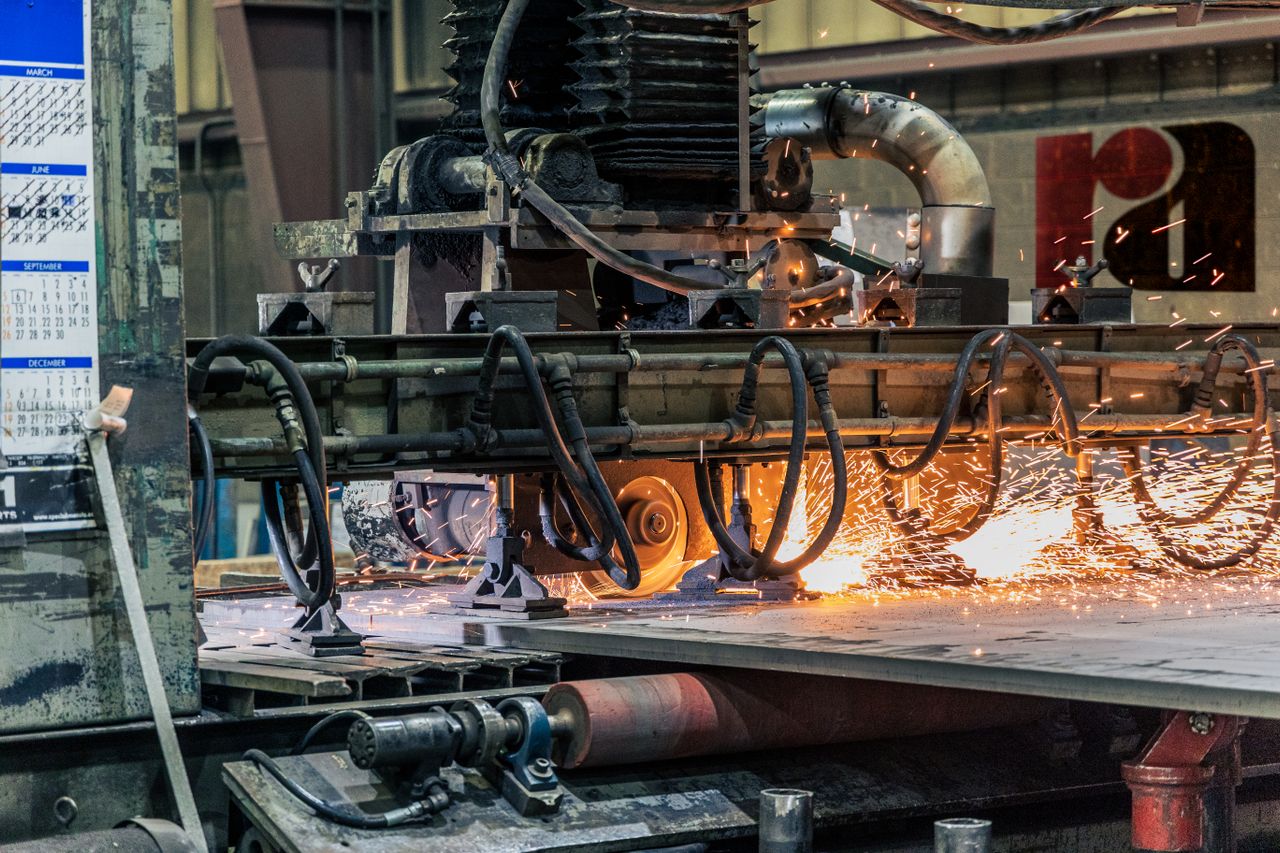
Industry workshops serving these operators have invested in banding stations that combine programmable tension control, heated rotation, and precise traverse motion to handle armatures ranging from small auxiliary motors to the largest traction motors. Equipment capable of handling 12,000-pound armatures up to 96 inches between centers is increasingly standard in shops serving Class I freight railroads, transit agencies, and heavy industrial customers.
Workforce Constraints Mirror Brazing Industry Pressures
The same skilled labor shortage affecting commutator brazing applies to banding work. Veteran technicians who learned to hand-apply steel banding and feel proper tension by touch are retiring without direct replacements. Modern banding equipment compensates by automating tension control, monitoring temperature in real time, and providing process records that document compliance with rebuild specifications. This documentation matters for transit agencies seeking federal cost recovery and for industrial customers requiring traceable quality on critical equipment.
The parallels with brazing modernization are direct and explored in Skilled Labor Shortage Pushes DC Motor Manufacturers Toward Automated Brazing Systems. Both processes share the reality that DC motor rebuilds cannot tolerate variability—a single failure in the field costs more than years of equipment investment.
What This Means for the DC Motor Equipment Market
The combination of aging fleets, growing maintenance backlogs, constrained new unit supply, and a thinning skilled workforce points toward sustained demand for precision banding equipment through the rest of the decade. Operators who can rebuild traction motors quickly and reliably hold a competitive advantage in a market where downtime costs are climbing and replacement options remain limited.
CAM Innovation: Your Partner in DC Motor Manufacturing and Repair
At CAM Innovation, we engineer banding equipment for the demanding realities of traction motor and industrial DC motor rebuilds. Our machines handle the largest armatures in heavy industry while delivering the controlled tension, heat management, and process documentation required for reliable, repeatable results.
Our Services Include:
- Banding Machines – Precision banding stations engineered for glass fiber resin application on traction motor and industrial DC motor armatures of all sizes
- DC Motor Equipment – Complete equipment lines for armature winding, commutator preparation, brazing, banding, seasoning, and motor assembly
Ready to Strengthen Your Armature Rebuild Capability? Contact CAM Innovation
Works Cited
“Age and Availability of Amtrak Locomotive and Car Fleets.” Bureau of Transportation Statistics, U.S. Department of Transportation, www.bts.gov/content/age-and-availability-amtrak-locomotive-and-car-fleets. Accessed 26 May 2026.
Blake, Tagan, et al. “Managing Railcar Maintenance: A Primer on Practices and Improvement Opportunities for the U.S. Transit Industry.” FTA Report No. 0043, Federal Transit Administration, www.transit.dot.gov/sites/fta.dot.gov/files/FTA0043_Research_Report_Summary.pdf. Accessed 26 May 2026.