America’s $1.66 Trillion Reshoring Wave Is Stress-Testing Motor Manufacturing Equipment Service Capacity

CAM Innovation: Custom Automated Machinery for the Electric Motor Industry
The largest reshoring wave in US manufacturing history is colliding with an inconvenient reality on the factory floor: much of the equipment now expected to ramp production is decades old, increasingly difficult to staff, and operating well past the point where reactive maintenance can keep up. As of late April 2026, IndustrialSage’s investment tracker has logged roughly $1.662 trillion in announced private-sector US manufacturing commitments since January 2025, spanning 131 companies across 32 states. The first quarter of 2026 also delivered the first positive manufacturing job growth in three years. The capital is flowing. The question is whether the machinery can keep up.
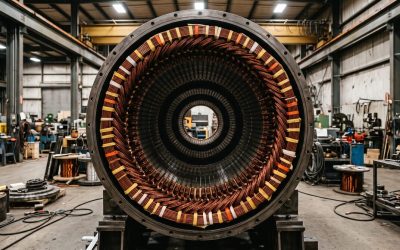
For motor manufacturers and the repair shops that keep American industry spinning, the answer hinges on something that rarely makes headlines: equipment service. The coil winders, taping machines, commutator undercutters, banding machines, and TIG welders that produce and rebuild electric motors have long lifecycles, but they require knowledgeable application support, parts availability, and emergency response when production lines go down. None of that scales overnight, and the gap between policy-driven demand and on-the-floor service capacity is becoming the quiet constraint of the reshoring decade.
Motors Sit at the Center of the Reshoring Story
Electric motors are not peripheral to the reshoring equation. They are the workhorses behind nearly every category of industrial output, from semiconductor fabs and pharmaceutical lines to the steel, paper, and food processing plants that supply them. According to the U.S. Energy Information Administration, nearly half of the electricity consumed in the manufacturing sector powers electric motors driving fans, pumps, conveyors, and compressors, with bulk chemicals, food, petroleum, primary metals, and paper accounting for the heaviest usage. Motors typically fail every five to fifteen years, the EIA notes, and when they do, operators must decide whether to replace or rewind them — a decision now being made tens of thousands of times across freshly capitalized plants.
Demand is also shifting toward higher-efficiency motor classes. Standards for IE4 and IE5 ultra-premium efficiency motors are tightening, and US manufacturers facing federal motor efficiency rules now have to support those builds and rewinds with equipment capable of meeting much tighter tolerances than the legacy machinery on most shop floors was designed to deliver. Every percentage point of motor efficiency improvement gets locked in at the manufacturing or rewinding stage — at the coil winder, the press, the taping machine, the banding lathe — which means the production equipment itself sets the ceiling on what kind of motors a plant or shop can credibly deliver.
Industry forecasts reinforce the trend. The US electric motor market crossed $24 billion in 2025 and is projected to grow at a mid-single-digit pace through the end of the decade, with permanent-magnet synchronous motors growing roughly twice as fast as the broader market. Behind every one of those motors is a winding cell, an assembly line, or a repair bench that has to be in working order on the day the customer needs the motor — not the day after a service callout finally arrives.
Aging Equipment Meets Surging Demand
The reshoring wave is hitting an industrial base that has been deferring modernization for years. Recent industry research indicates that roughly one-third of businesses had not modernized their motor-driven systems in the prior two years, contributing to preventable equipment failures, while approximately 67 percent of manufacturers still rely primarily on reactive maintenance — running equipment until it breaks — even though predictive approaches are associated with the lowest rates of unplanned downtime. The result is a brittle production base trying to absorb a generational increase in orders. (For how this plays out in specialty repair operations, see Aging Motor Repair Equipment Becomes a Bottleneck as Industrial Demand Surges.
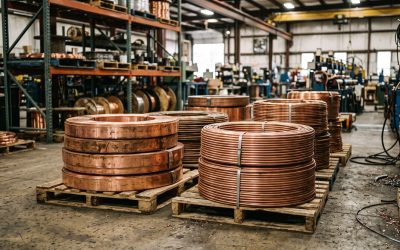
For motor builders, the brittleness is compounded by parts and skill scarcity. As legacy DC and AC motor machinery ages, only the original manufacturer typically retains the engineering records, fixture drawings, and service expertise needed to keep that equipment in spec. When a commutator undercutter, coil taping machine, or rotor winder goes down, hours matter. The cost of unplanned downtime on a motor production line scales with the rest of the operation: scrap copper, expedited shipping on missed customer commitments, idle operators on the rest of the cell, and quality holds on motors built before the issue was caught. None of those costs show up on a service-contract line item, but they show up on the income statement just the same.
The condition of US repair-side equipment matters too. The Consortium for Energy Efficiency has reported that of approximately 2.9 million motor failures each year, only about 600,000 motors are replaced — meaning the bulk are rewound and returned to service. Every one of those rewinds runs on specialty equipment that itself has to hold tolerance: lathes turning commutators, undercutters cutting mica to controlled depths, taping machines applying insulation under tension. If the rewind shops cannot ramp, the broader industrial base does not ramp either.
Workforce Constraints Sharpen the Service Question
The workforce side of the reshoring story is no easier than the equipment side. According to the NIST Manufacturing Extension Partnership, employee recruitment and retention has climbed steadily as a top concern reported by small and medium-sized manufacturers, with 55 percent of MEP clients identifying it as a key challenge in fiscal year 2024 — up from 41 percent a decade earlier. The very technicians plants need to keep new lines running are the ones in shortest supply.
Manufacturing labor data from early 2026 underscores the mismatch. Roughly 415,000 open manufacturing positions persisted into late 2025 even as broader hiring stalled, with the hardest-to-fill roles concentrated in maintenance technicians, equipment repair specialists, controls engineers, and operators of advanced production machinery — exactly the positions that protect uptime on a motor production line. As covered in Skilled Technician Shortage Forces Motor Builders to Lean Harder on OEM Field Support, that shortage is reshaping how motor manufacturers structure their service relationships and what they expect from equipment OEMs.
The implication for plant managers is unavoidable: even with capital approvals in hand and orders on the books, the realistic ramp speed of a US motor manufacturing operation in 2026 is set less by the throughput of the machines than by whether someone is on hand who can keep them running. Hiring is a multi-year project. Operator training on specialty equipment is a multi-month one. Neither can be solved on the timetable of an inbound purchase order.
OEM Service Becomes a Strategic Asset
These dynamics are pushing motor producers and repair shops to lean harder on equipment OEMs for three things: application engineering at the front end, on-site installation and operator training, and round-the-clock emergency response when something goes wrong. Internal maintenance teams, stretched thin by skilled-trade retirements, increasingly cannot carry the full service burden alone. Plants that succeed in 2026 are the ones treating OEM relationships as extensions of their own engineering staff rather than transactional vendor accounts.
The financial math is direct. An hour of unplanned downtime on a coil winding line or stator assembly cell can wipe out a shift’s margin, and the secondary costs — scrap, expedited parts, idle labor, missed customer ship dates — quickly compound. Equipment OEMs that maintain decades of technical documentation, ship spare parts the next business day, and dispatch field engineers who actually designed the machines deliver something a third-party service contract cannot: continuity of expertise. When the same engineering team that originally built and commissioned a coil taping machine is also the one returning a service call on it twenty years later, the gap between problem and resolution shrinks dramatically.
The same dynamic plays out at the front end of the lifecycle. Application engineering — selecting the right machine configuration for a specific motor design, planning operator training, scheduling installation around production calendars — is where many of the most expensive mistakes get made or avoided. Plants that involve OEM application engineers early routinely report shorter ramp times, fewer post-installation surprises, and better first-year quality numbers than plants that treat the equipment purchase as a transaction and leave integration entirely to internal staff.
What 2026 Looks Like on the Floor
The reshoring story is real, and the policy tailwinds are real. But factory output does not come from press releases. It comes from machines that run, technicians who know how to keep them in spec, and OEMs that pick up the phone when a line goes down at 2 a.m. on a holiday weekend. For motor manufacturers and repair shops sitting at the center of this rebuild, equipment service capacity is no longer a back-office concern — it is the constraint that separates plants hitting production targets from plants explaining why they did not.
The good news is that the constraint is solvable. Manufacturers that have invested in OEM service relationships, kept up with parts inventory, planned operator training in advance of equipment installation, and structured maintenance shifts around the realities of the local labor market are ramping at materially higher rates than peers who have treated service as a deferrable cost. The bad news is that the window to make those investments narrows every quarter the reshoring wave continues, because the same OEMs the plants will need are absorbing the same demand surge — and the field engineers, parts inventories, and emergency response slots are not infinite either.
CAM Innovation: Service and Support for Motor Manufacturing
For more than a century, CAM Innovation has built and serviced custom automated machinery for the electric motor industry, working alongside major OEMs and top-tier repair centers across North America and beyond. Our service team draws on technical records spanning more than 60 years and includes engineers with up to 45 years of hands-on experience on the very machines we still build today.
Our Services Include:
- CAM Service & Support — Application support, installation, training, spare parts, and 365-day emergency response from the people who design and build the machines
- Coil Manufacturing Equipment — Custom coil winding, taping, forming, and pressing systems engineered and built in Hanover, PA
Need Service Now? Contact CAM Innovation to discuss application support, spare parts, or emergency assistance for your motor manufacturing equipment.
Works Cited
“Challenges, Solutions, and Success Stories Across the MEP National Network.” Manufacturing Innovation Blog, National Institute of Standards and Technology, 9 May 2025, www.nist.gov/blogs/manufacturing-innovation-blog/challenges-solutions-and-success-stories-across-mep-national. Accessed 30 Apr. 2026.
“Minimum Efficiency Standards for Electric Motors Will Soon Increase.” Today in Energy, U.S. Energy Information Administration, 26 Sept. 2014, www.eia.gov/todayinenergy/detail.php?id=18151. Accessed 30 Apr. 2026.