Wire Harness Automation Demands Advanced Taping Solutions for Motor Production

CAM Innovation: Engineering Excellence in Motor Production Equipment Since 1910
The wire harness processing equipment market continues robust expansion driven by automotive industry reliance on advanced driver-assistance systems, electric vehicle proliferation, and manufacturing automation adoption across industrial sectors worldwide. This growth creates sustained demand for taping equipment capable of meeting increasingly stringent quality and productivity requirements while addressing labor availability challenges that affect manufacturing operations globally.
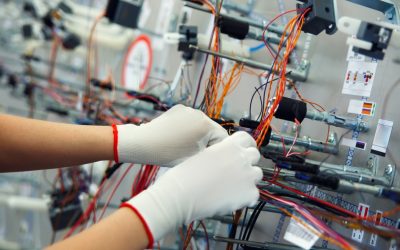
Traditional harness assembly has long depended on labor-intensive manual processes that introduce variability and limit production scalability. Despite various automation advances in cutting, stripping, and crimping operations over recent decades, tape application remains a challenging process where many facilities still rely on operator skill for acceptable results. The inherent complexity of wire harness designs—with varying wire lengths, connector types, and routing configurations—has historically required manual intervention that current robotics cannot fully replicate across all application scenarios.
Manufacturers seeking competitive advantages are investing in taping solutions that address these limitations while supporting the flexibility that diverse harness production requires. The convergence of labor cost pressures, quality requirements, and production volume demands makes taping automation increasingly attractive across multiple manufacturing sectors. Understanding how taping technology integrates with broader manufacturing equipment strategies proves essential for facilities evaluating automation investments that will shape their competitive positioning for years ahead.
Industry Drivers Accelerating Equipment Demand
Electric vehicle production represents a primary catalyst reshaping harness manufacturing requirements across the global automotive industry. Every electric vehicle contains traction motors plus additional motors for auxiliary systems including power steering, cooling, climate control, and braking—each requiring properly insulated and protected wiring connections that must perform reliably throughout vehicle service life. The scale of this transformation is creating unprecedented demand for harness production capacity and the equipment that supports it.
According to engineering program information from Oregon State University’s College of Engineering, electric machine technology education is expanding as electrification transforms multiple industries including transportation, renewable energy, and industrial applications. This educational emphasis reflects growing industry demand for engineers and technicians capable of designing, manufacturing, and maintaining electric motors and the associated wiring systems that connect them to power sources and control systems.
Plug-in hybrid electric vehicles present particularly demanding harness requirements due to their dual powertrain configurations requiring extensive high-voltage cabling connecting internal combustion engines, electric motors, batteries, and control modules. As regulatory authorities continue imposing stricter emissions standards, automakers are emphasizing plug-in hybrid models as transition vehicles, creating sustained demand for the complex wiring harnesses these vehicles require. Harness manufacturers serving this market segment need equipment capable of handling high-voltage insulation requirements while maintaining production volumes.
Industrial automation creates parallel demand as factories implementing robotic systems, automated material handling, and smart manufacturing technologies require substantial motor and wiring infrastructure throughout their facilities. This creates a reinforcing cycle where motor manufacturers must adopt automated production systems to build the motors that enable automation in other industries. For broader context on how these interconnected market forces affect equipment decisions across multiple sectors, examining Spiral Wrap Taping Technology Transforms Motor and Wire Harness Manufacturing provides comprehensive perspective on industry transformation trends.
Technical Requirements for Harness Taping Operations
Wire harness taping demands equipment capable of accommodating diverse workpiece geometries while delivering consistent tape application across production runs that may include hundreds or thousands of similar assemblies. Harnesses range from simple bundled wire groups requiring basic protection to complex assemblies with multiple breakouts, splices, and connector terminations requiring precise tape placement and consistent overlap throughout varying diameter sections.
Sweep-through guard designs enable operators to handle harnesses with multiple wire breakouts efficiently without interrupting production cycles. Rather than threading entire assemblies through tape heads—a time-consuming process for complex harnesses—operators can pull breakout wires through specialized safety guards without opening enclosures or stopping tape application. This capability proves essential for automotive harnesses with branching configurations that connect multiple vehicle systems through single main trunk assemblies.
Tape overlap consistency directly affects insulation integrity and harness durability throughout product service life. Automated ratio controllers synchronize tape head rotation with powered drive rollers, maintaining precise overlap percentages regardless of operator-controlled feed rates or speed variations during production. This automation eliminates the skill-dependent variability that characterizes manual taping while enabling operators to focus on positioning, quality verification, and addressing the unique requirements of individual harness configurations.
Drive roller systems designed specifically for harness production hold workpieces securely while enabling smooth feed-through during taping operations without damaging delicate wire insulation or conductor strands. Pneumatic engagement allows rapid loading and unloading while ensuring consistent feed rates during production cycles. These systems accommodate the flexibility that wire harness diversity requires while maintaining the mechanical control necessary for quality tape application throughout extended production runs.
Productivity and Quality Considerations
Semi-automatic taping systems typically deliver three to five times the throughput of manual operations while significantly improving consistency across production volumes. A skilled manual operator might tape ten to fifteen harness sections hourly depending on complexity, while automated systems routinely produce forty to sixty sections with uniform quality characteristics. For high-volume automotive or industrial production serving major OEM customers, this productivity differential translates directly to manufacturing capacity expansion without proportional workforce growth.
Quality consistency may represent the most compelling automation benefit for manufacturers serving demanding customers with strict quality requirements. Manual taping introduces inherent variability based on operator technique, fatigue levels, attention, and individual working methods throughout shifts and across different operators. Automated systems produce virtually identical tape applications hour after hour, enabling simplified quality control processes and more reliable downstream assembly operations that depend on consistent harness dimensions and characteristics.
According to professional education programs offered by MIT covering electric motor design, embedded control systems and power electronics enable production capabilities that were previously impractical at commercial scale—forming the foundation of modern automated manufacturing including precision taping operations. This technological foundation supports the equipment advances that make consistent automated taping economically viable across diverse production environments.
Material efficiency improves with automated tape application as systems optimize usage through precise measurement and controlled dispensing that minimizes waste. Copper conductors and specialized tape materials represent significant production costs that accumulate across high-volume operations. Even modest efficiency improvements generate substantial savings when multiplied across thousands of harness assemblies produced monthly. The railroad and heavy equipment industries face similar material optimization pressures in their motor maintenance operations, as explored in Railroad and Mining Motor Maintenance Drives Industrial Taping Machine Investment.
Implementation Considerations for Manufacturers
Equipment selection requires balancing production volume requirements against capital investment, operational flexibility, and workforce capabilities. Manual taping machines suit low-volume operations or applications requiring frequent adjustment and custom configurations, while semi-automatic and fully automatic systems address higher-volume production with more consistent requirements across extended runs. Many facilities implement tiered approaches with different equipment levels serving distinct production segments based on volume and complexity characteristics.
Operator training requirements differ substantially between equipment types, affecting both implementation timelines and ongoing operational flexibility as workforce composition changes. Automated systems allow relatively inexperienced operators to achieve production standards quickly after initial training, while manual methods require extensive practice to develop the coordination necessary for consistent professional-grade results. This training differential becomes significant when evaluating total cost of ownership and considering workforce availability challenges affecting many manufacturing regions.
Integration with existing production workflows affects equipment selection and implementation planning significantly. Modern taping systems can connect with manufacturing execution systems for production tracking, quality monitoring, and maintenance scheduling. These data capabilities support continuous improvement initiatives while providing visibility into equipment utilization and performance trends that inform future investment decisions and capacity planning.
Tape material versatility influences equipment value across diverse application requirements. Systems capable of handling multiple tape types—including adhesive and non-adhesive materials, various widths, and different backing materials—provide flexibility for facilities serving multiple customers or product lines. This versatility improves capital utilization while simplifying equipment management compared to dedicated single-purpose machinery.
CAM Innovation: Your Partner in Motor Production Excellence
CAM Innovation has specialized in machinery for building and repairing large motors since 1910, serving customers in over 60 countries including the world’s leading railroads, mining equipment companies, and electrical equipment manufacturers. Our spiral wrap taping machines deliver the precision, reliability, and productivity that wire harness and motor production operations demand.
Our Services Include:
- RHT Semi-Automatic Taping Machine – Fast spiral taping with programmable overlap control for harnesses, cables, tubing, and buss bars
- Custom Equipment Solutions – Tailored machinery addressing specific production and maintenance requirements
Ready to Transform Your Operations? Contact CAM Innovation to discuss how our taping solutions can enhance your wire harness and motor production capabilities.
Works Cited
“Design of Electric Motors, Generators, and Drive Systems.” MIT Professional Education, Massachusetts Institute of Technology, professional.mit.edu/course-catalog/design-electric-motors-generators-and-drive-systems. Accessed 1 Feb. 2026.
“Electrical and Computer Engineering: Energy Systems Focus Area.” College of Engineering, Oregon State University, engineering.oregonstate.edu/academics/programs/electrical-and-computer-engineering/undergraduate/energy-systems. Accessed 1 Feb. 2026.
Related Articles